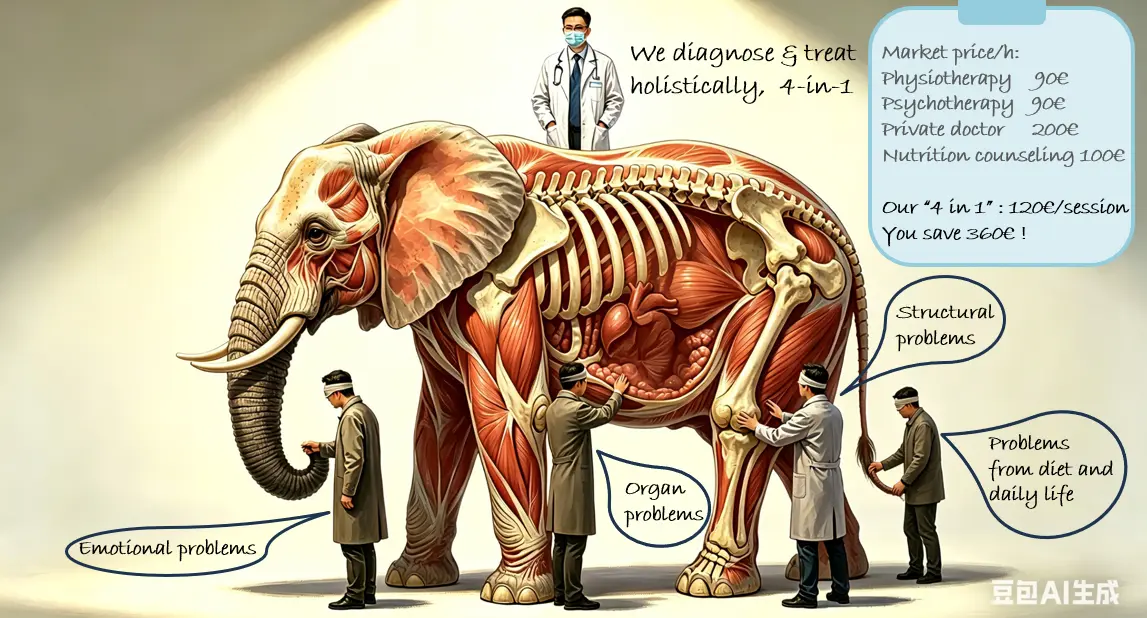
Understanding your body
Why Does Stress Cause Illness?
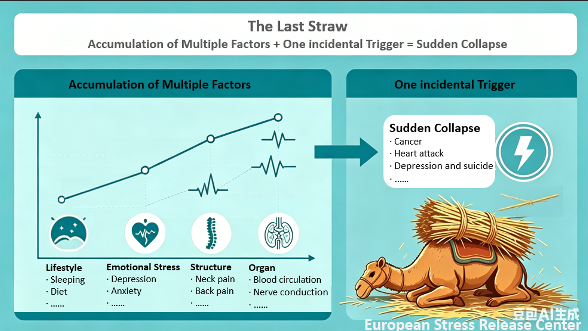
Stress affects the body through multiple pathways. From a physiological standpoint, its impact is primarily realized through a chain reaction within the neuro-endocrine-immune system.
Continuous stress leads to the persistent secretion of the stress hormone cortisol. For example:
• Nervousness can cause stomach aches
• Long-term tension can result in chronic digestive dysfunction
Stress also disrupts the balance between the sympathetic and parasympathetic nervous systems, often manifesting as headaches during periods of high pressure.
In Traditional Chinese Medicine (TCM), emotions and physical organs are viewed as an interconnected system rather than isolated parts. Emotional stress is believed to alter the flow of internal energy (Qi), which in turn affects specific organ systems:
AngerLiver
Anger causes energy to "rush upward". Associated with the Liver system. Common manifestations: High blood pressure, headaches, gallbladder inflammation.
FearKidney
Fear causes energy to "sink". Linked to the Kidney system. Effects may include: Weak knees, loss of bladder control, reproductive and urinary system issues.
WorrySpleen
Overthinking and worry cause energy to "stagnate" or "knot". Associated with the Spleen system. Symptoms may include: Bloating, loss of appetite, insomnia, anxiety and depression, digestive disorders.
Emotion, organ system, and typical effects under stress| Emotion | Organ system | Effect |
|---|
| Anger | Liver | Anger causes energy to "rush upward". Associated with the Liver system. Common manifestations: High blood pressure, headaches, gallbladder inflammation. |
| Fear | Kidney | Fear causes energy to "sink". Linked to the Kidney system. Effects may include: Weak knees, loss of bladder control, reproductive and urinary system issues. |
| Worry | Spleen | Overthinking and worry cause energy to "stagnate" or "knot". Associated with the Spleen system. Symptoms may include: Bloating, loss of appetite, insomnia, anxiety and depression, digestive disorders. |
When stress is not expressed or released, the body may respond through somatization. Unexpressed emotional tension transforms into physical pain, serving as a signal that the body's internal balance has been disrupted.